Fire Pit vs. Fireplace vs. Fire Table: Which Fire Feature Is Right for Your Outdoor Space?
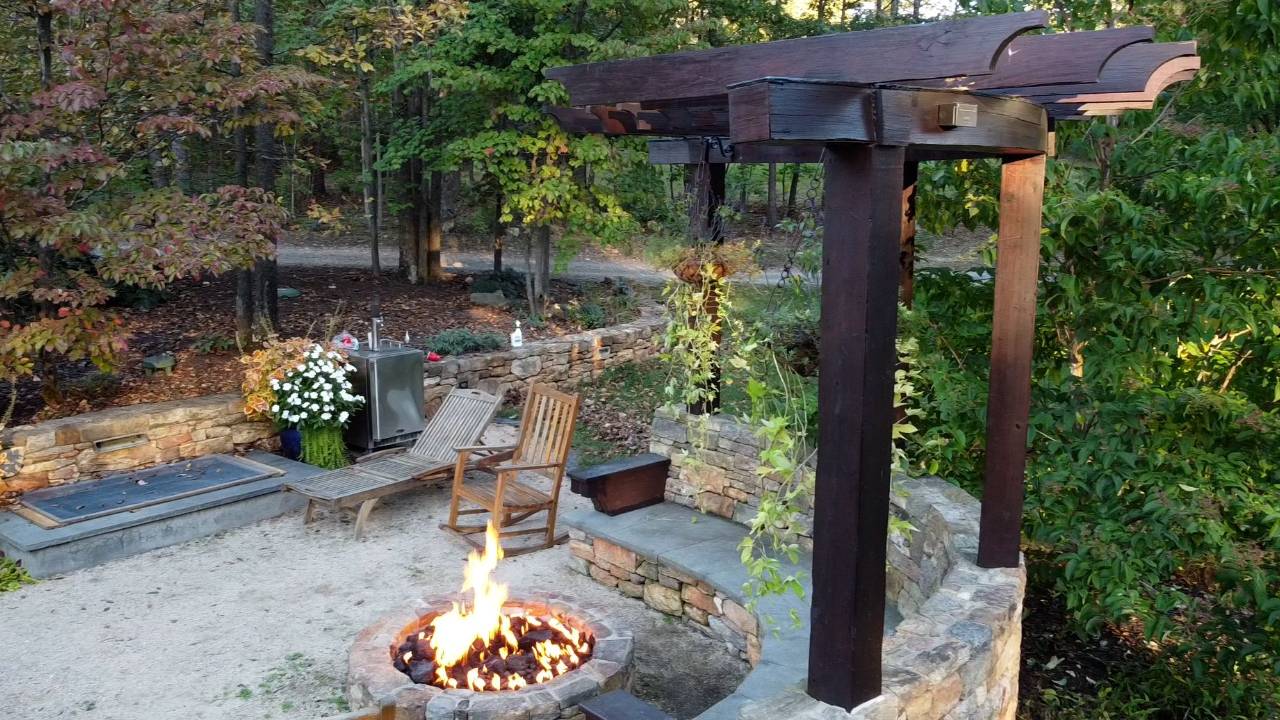
A fire feature can completely change the way an outdoor space is used. It can create a natural gathering point, extend the usable season, and add another layer of warmth and atmosphere to a garden or outdoor living area.
But not every fire feature serves the same purpose. A traditional fire pit, architectural fireplace, and fire table each create a different experience and can have very different impacts on the design of a space.
When planning an outdoor living area, it is worth considering not only how the fire feature looks, but also how people will gather around it, how much space it requires, and how it works with the surrounding architecture.
Fire Pits
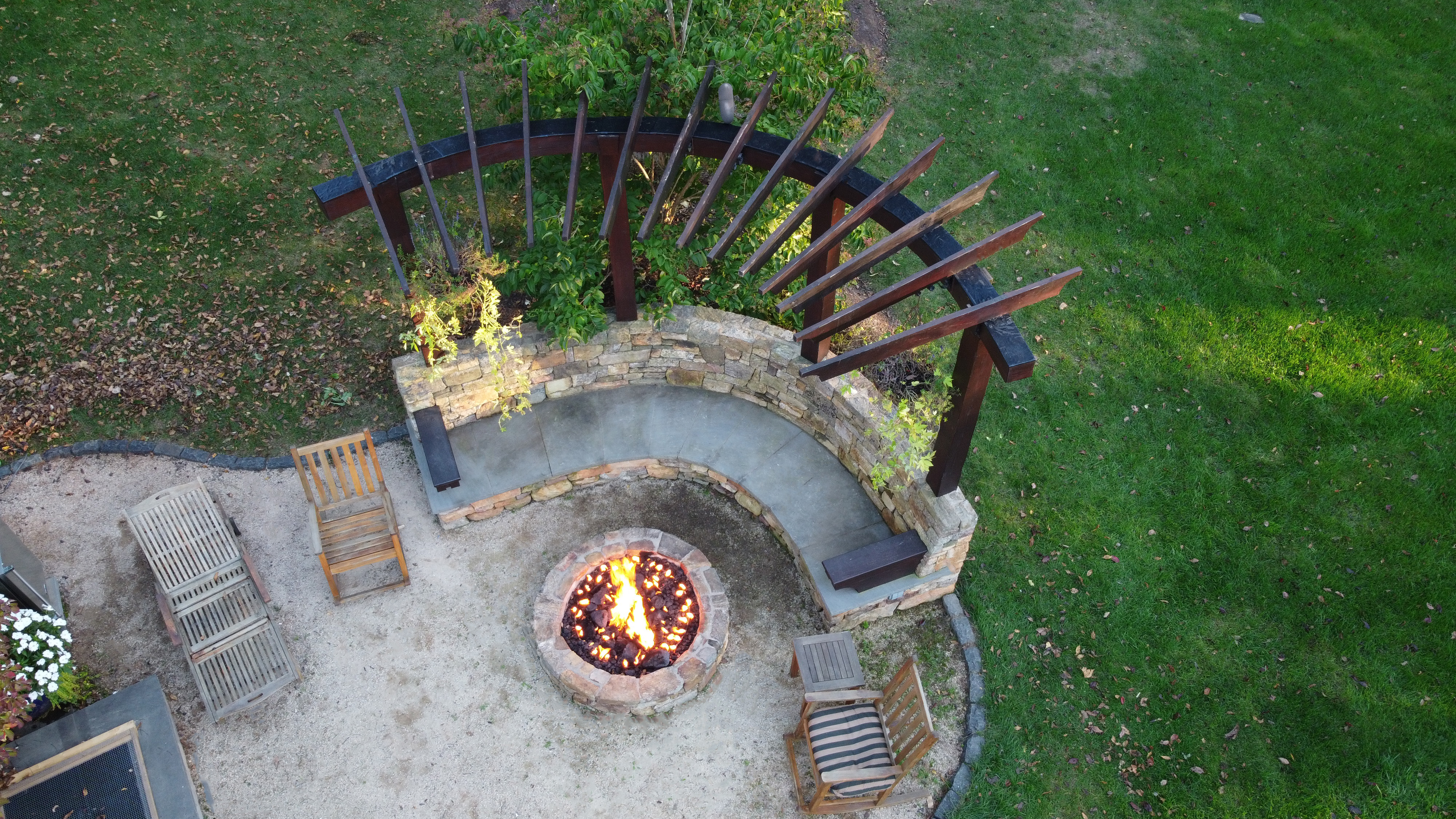
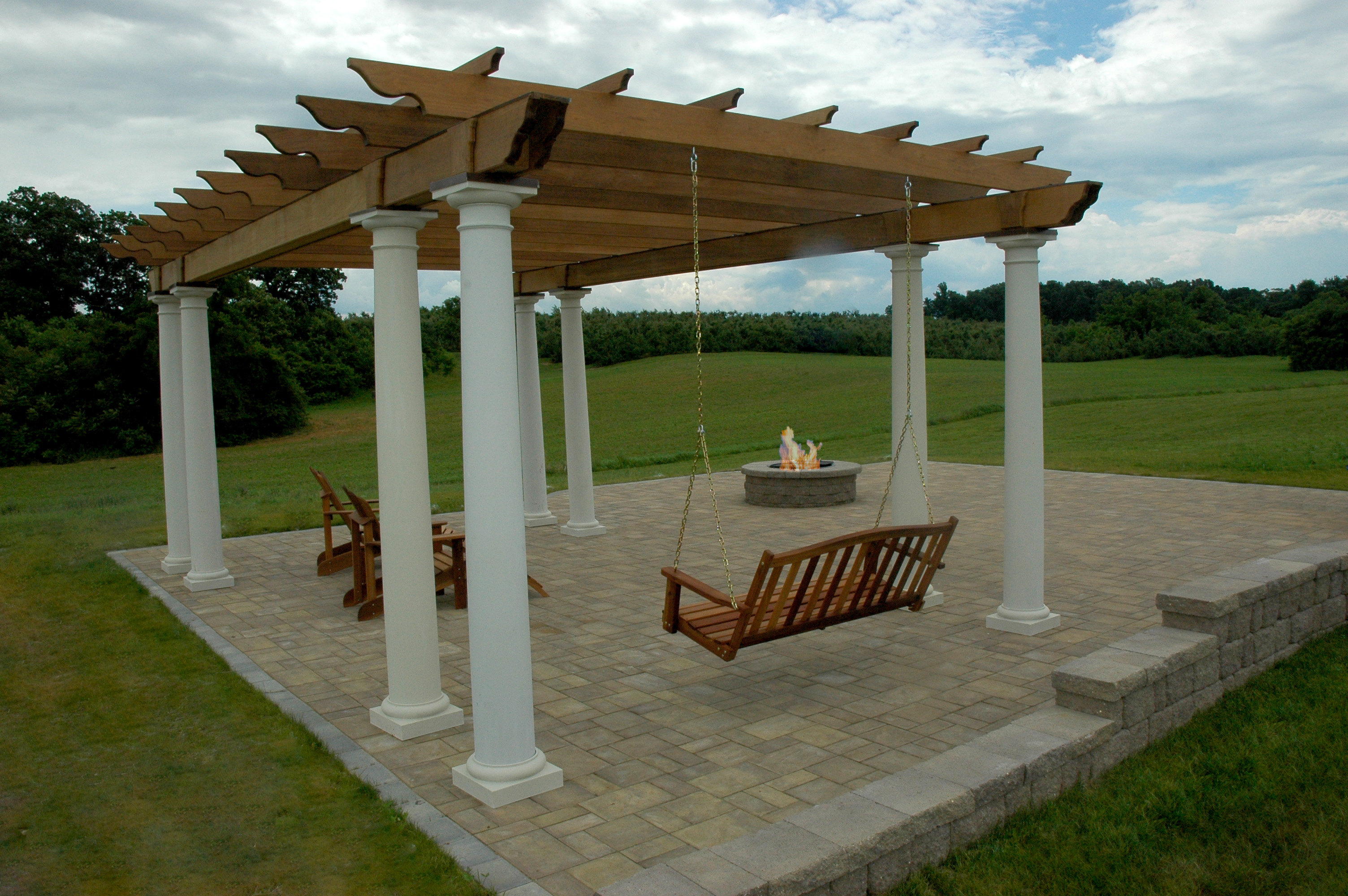
Fire pits are one of the most flexible ways to introduce fire into an outdoor space. Because they are generally open on all sides, seating can be arranged around the fire, creating a natural gathering area.
A fire pit can be as simple as a low masonry structure or as refined as a custom architectural feature integrated into a larger patio design. The relatively low profile also allows a fire pit to become part of the landscape without dominating the space.
Fire pits work particularly well when conversation and gathering are the priority. They encourage people to sit facing one another rather than facing a single direction.
Consider a fire pit if you want:
- A central gathering point
- Seating arranged around the fire
- A lower-profile architectural element
- A feature that integrates easily into a garden or landscape
- A more informal outdoor atmosphere
One consideration is that an open fire pit does not provide the same architectural presence or directional warmth as a fireplace. Its placement and surrounding clearances also need to be carefully considered during the design process.
Outdoor Fireplaces
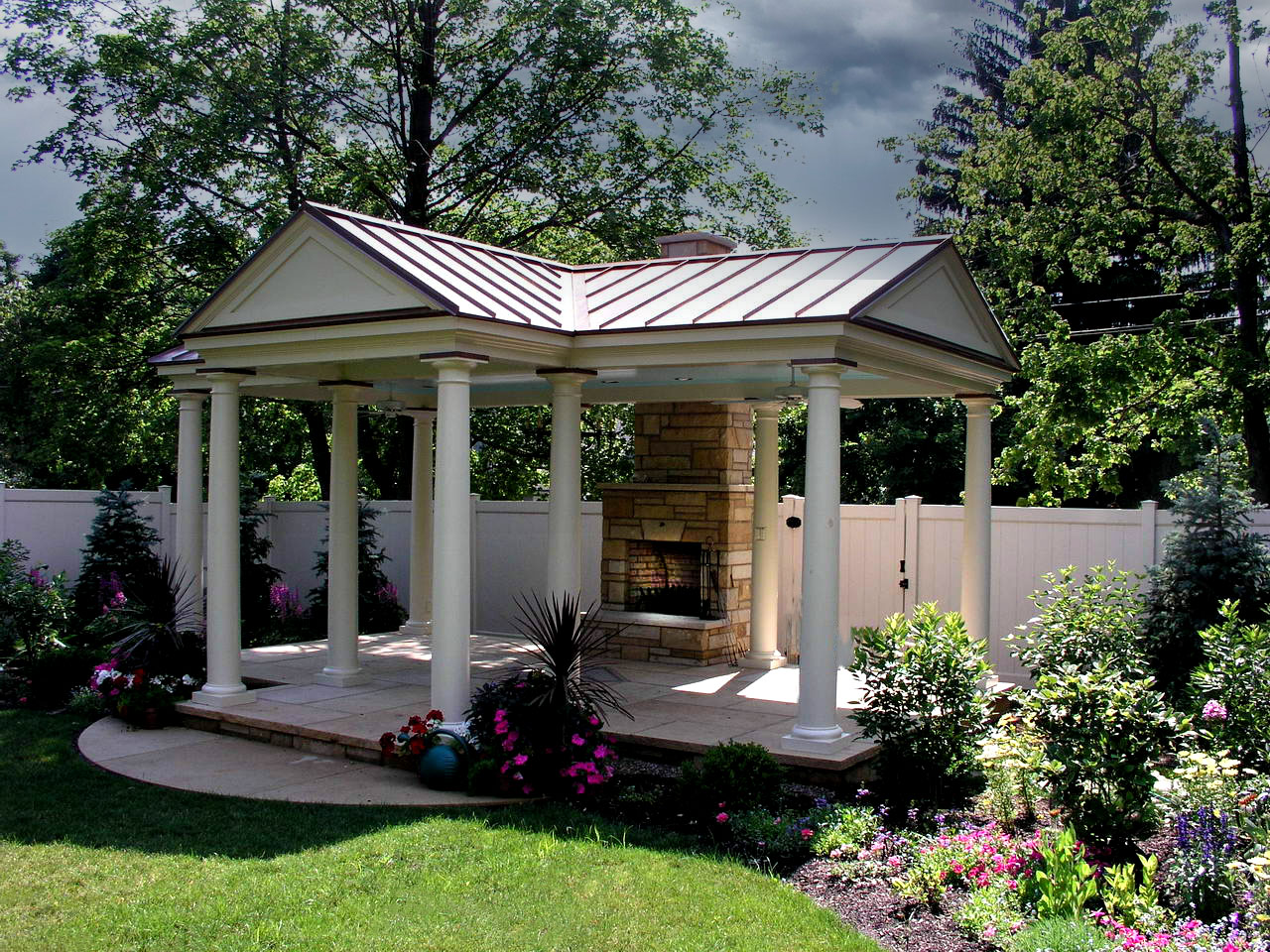
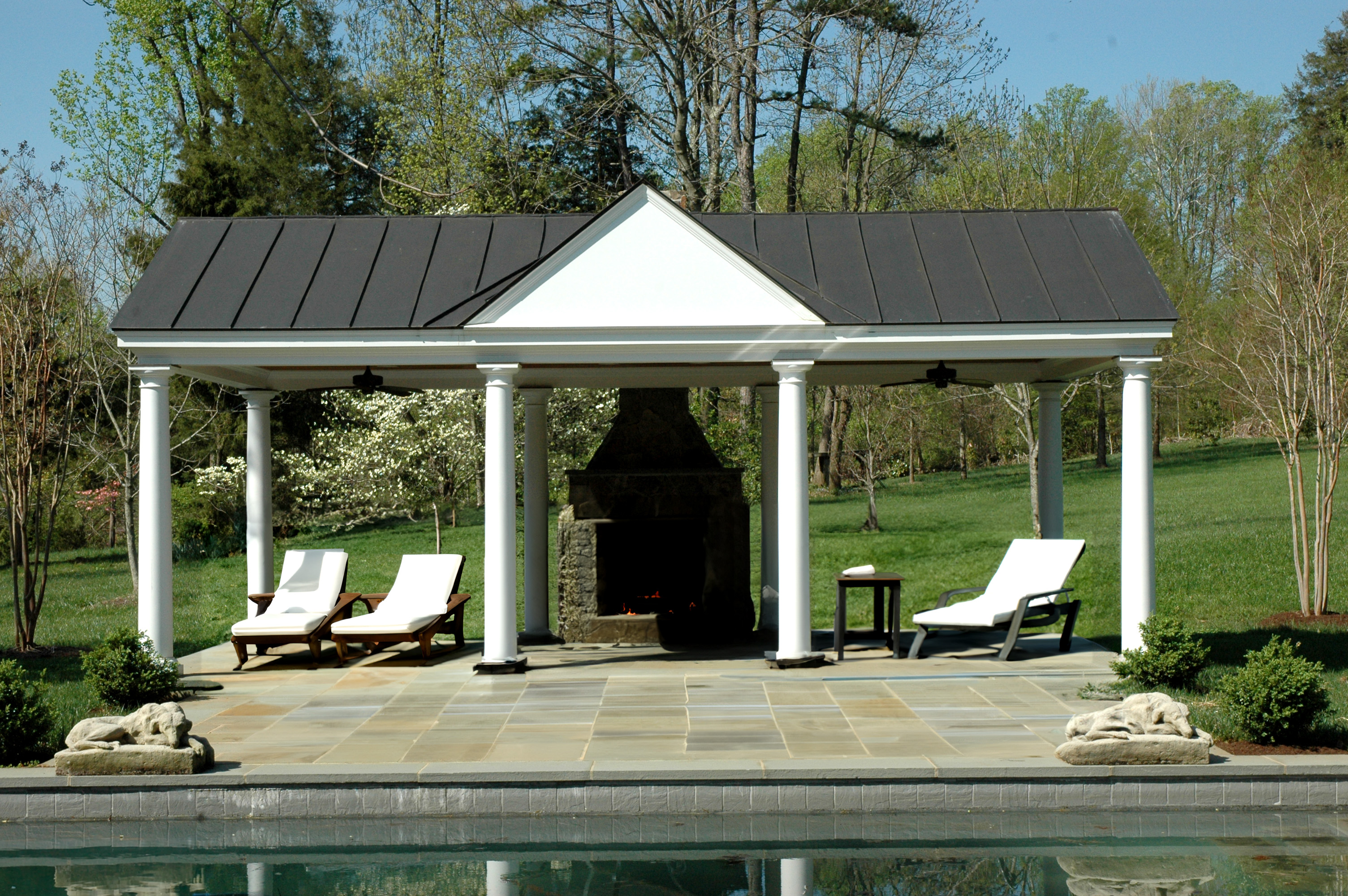
An outdoor fireplace takes a very different approach. Rather than placing the fire at the center of a seating arrangement, a fireplace creates a vertical focal point.
This makes the fireplace part of the architecture of the space. It can anchor the end of a patio, define an outdoor room, or become a major visual element beneath a pavilion or other garden structure.
The vertical form can also provide a strong backdrop for an outdoor seating area. Materials, proportions, mantel details, and surrounding architectural elements can all be coordinated with the design of the home and garden.
A fireplace can also direct heat outward toward the seating area, rather than distributing the experience equally in every direction.
Consider an outdoor fireplace if you want:
- A strong architectural focal point
- A defined outdoor room
- A vertical design element
- A feature that complements a pavilion or covered structure
- Seating oriented toward the fire
Because fireplaces are more substantial structures, they typically require more planning and construction than a simple fire pit. Their location, chimney or venting requirements, materials, and relationship to surrounding structures should all be addressed as part of the overall design.
Fire Tables
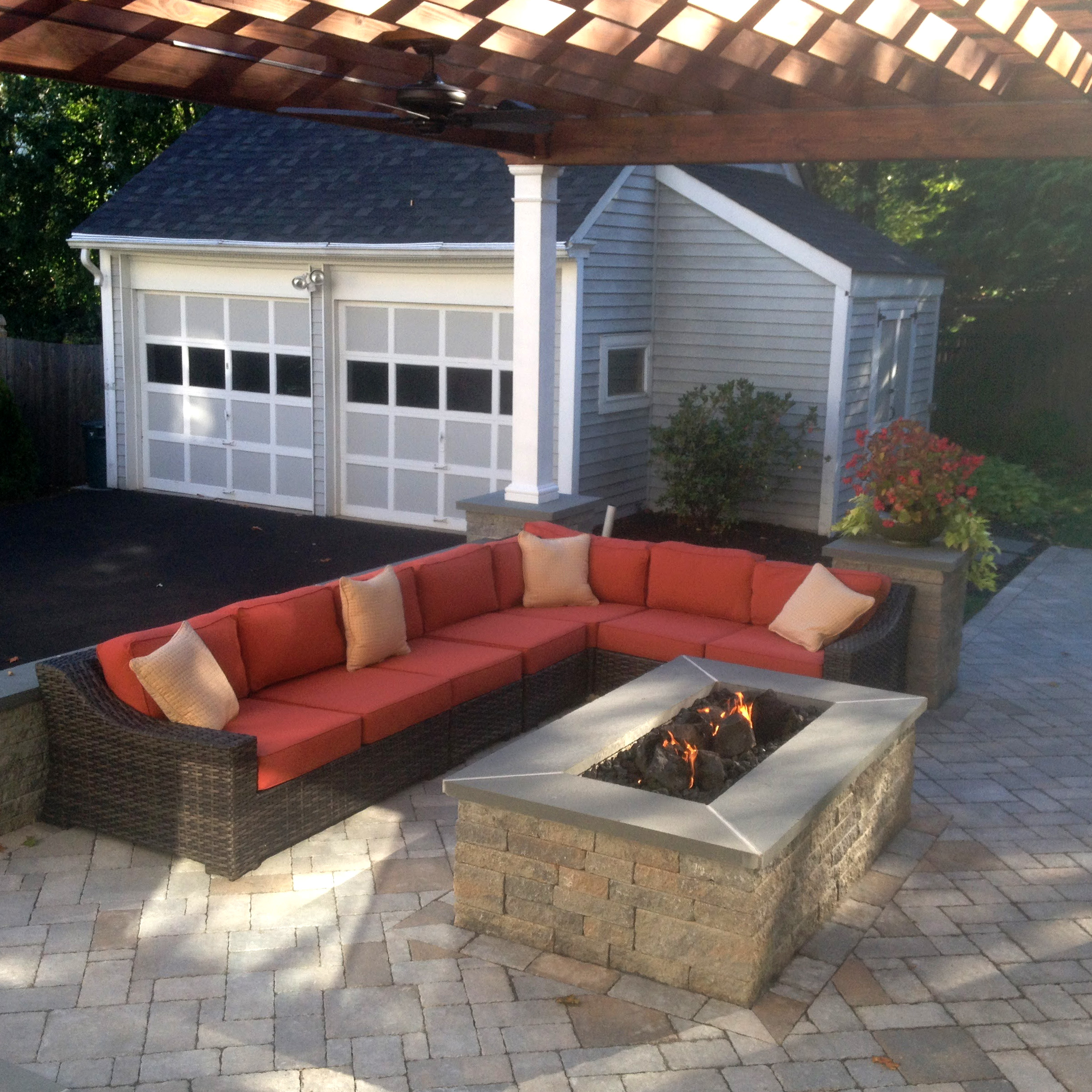
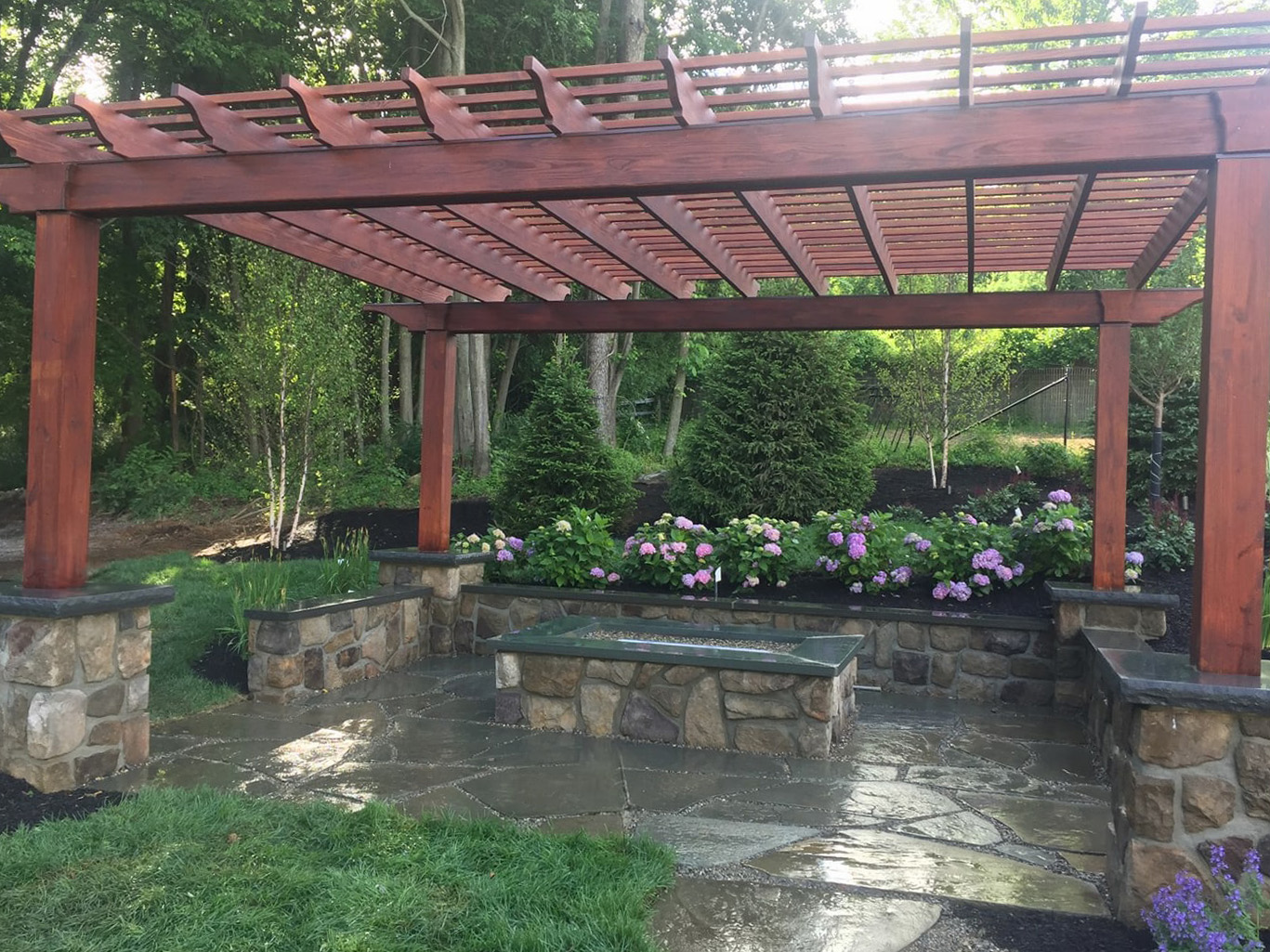
Fire tables combine the function of a fire feature with the everyday utility of a table.
Rather than creating a separate fire area, a fire table can be incorporated directly into a seating arrangement. Depending on its design, the surrounding surface can provide space for drinks, serving, or other items while the fire becomes the centerpiece.
Fire tables are particularly useful in spaces where flexibility is important. They can work well in conversation areas where people want the warmth and atmosphere of a fire without giving up valuable space to a dedicated fire pit.
Many fire tables also use gas, which can provide a controlled flame without the smoke, ash, or wood storage associated with a traditional wood-burning fire.
Consider a fire table if you want:
- A clean, contemporary appearance
- A flexible seating arrangement
- A controlled gas flame
- A fire feature that works naturally within a conversation area
The shape and proportions of the table are especially important. A fire table that is too large can overwhelm a seating area, while one that is too small may not provide the visual presence the space needs.
How Do They Compare?
There is no single fire feature that works for every outdoor space. Each creates a different relationship between fire, people, and architecture.
Think About the Structure Around the Fire
The fire feature itself is only one part of the design.
A pergola, pavilion, or other architectural garden structure can help define the space around a fire feature and determine how the entire area is experienced. A fireplace can become the architectural anchor of a pavilion, while a fire pit can sit beneath or adjacent to a pergola with seating arranged around it.
Ventilation and heat management become particularly important when a fire feature is incorporated into a covered outdoor structure. The height of the structure, roof design, materials, and location of the fire all need to work together.
The goal is not simply to add a fire feature to an existing space. It is to design the fire, structure, seating, and landscape as parts of the same outdoor room.
Choosing the Right Fire Feature
The best place to start is with how you want to use the space.
If you picture friends gathered in a circle around a central flame, a fire pit may make the most sense. If you want the fire to become an architectural focal point that anchors a room, an outdoor fireplace may be the better fit. If you want a fire feature that also functions as part of your seating and entertaining area, a fire table offers a more integrated solution.
Ultimately, the right choice is the one that fits the architecture, scale, and intended use of the outdoor space.
